TS泛型粗浅理解(一)

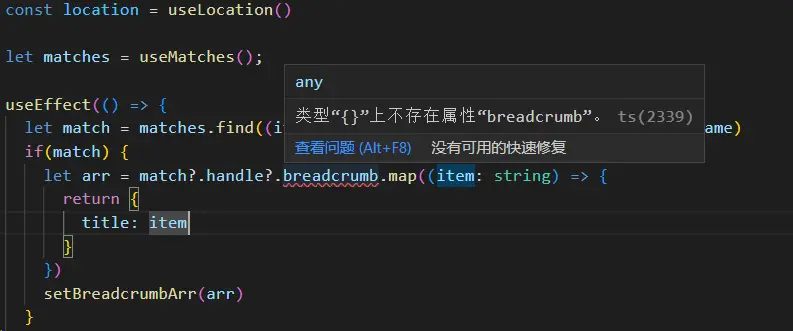
在使用react-router-dom的时候,用到了useMatches的方法,ts一直提示报错,如下:
根据提示,找到了这个类型:

1
2
3
4
5
6
7
8
export interface UIMatch<Data = unknown, Handle = unknown> {
id: string;
pathname: string;
params: AgnosticRouteMatch["params"];
data: Data;
handle: Handle;
}
import type {UIMatch} from "react-router-dom"

这才对泛型有了一丢丢理解。
使用时的场景:

1
2
3
4
5
6
7
8
9
10
11
12
13
const location = useLocation()
let matches = useMatches();
useEffect(() => {
let match = matches.find((item: any) => item.pathname == location.pathname)
if(match) {
let arr = match?.handle?.breadcrumb.map((item: string) => {
return {
title: item
}
})

}
}, [location.pathname])

breadcrumb一直提示报错
发现matches的数据类型为UIMatch<unknown, unknown>所以报错

根据UIMatch的类型提示,我们发现DataHandle的类型为unknown,所以这时候需要使用any进行强制类型转换, 代码如下:

let matches = useMatches() as any;
``
或者将matches的类型声明:
let matches:UIMatch<any, any>[] = useMatches()

注意的是:unknown只能接受any或者unknown类型。

接下来展示两个示例:

  • 示例一
1
2
3
4
5
6
7
8
9
10
11
12
13
14
15
interface IParams<D = number, M = string> {
data: D,
m: M
}
function getPrams(path: IParams<number,string>):IParams<number, string> {
console.log(path)
return {
data: 2,
m: '3'
}
}
const params = getPrams({
data: 4,
m: '6'
})
  • 示例二
1
2
3
4
5
6
7
function test <T> (arg:T):T{
console.log(arg);
return arg;
}
test<number>(111);// 返回值是number类型的 111
test<string | boolean>('hahaha')//返回值是string类型的 hahaha
test<string | boolean>(true);//返回值是布尔类型的 true

参考文章